
The operational challenge
A marina may record meter readings at the berth, maintain tariffs elsewhere and prepare charges later using a spreadsheet or separate billing process. When those steps are disconnected, staff must reconstruct which reading belongs to which berth, vessel and period of occupation.
The objective is not simply to store a meter number. It is to preserve the path from a recorded reading to the charge presented to the customer.
Can the team explain how a berth utility charge was calculated—from the previous reading through to the invoice?
1. Keep utility information connected to the berth
Electricity and water availability form part of the berth's operational information. Readings should remain associated with the berth, while the current vessel occupancy provides the context for the usage period.
2. Record readings consistently
Each new reading should create a dated record rather than overwriting the previous value. Retaining the earlier reading allows the marina to calculate consumption since the last recorded value and review the history if a charge is questioned.
3. Calculate consumption from consecutive readings
For a cumulative electricity meter, the chargeable usage is normally the difference between the latest valid reading and the preceding reading for that berth:
Latest reading − previous reading = consumption for the period
The same principle can be used for metered water where the marina charges by recorded volume. Units and meter-reset situations must be handled consistently under the marina's own procedures.
4. Apply the correct tariff
A tariff gives the recorded consumption its financial meaning. The applicable rate may vary by utility, berth, customer arrangement or charging period, so tariff changes should not make earlier charges impossible to explain.
Consumption × applicable tariff = calculated utility charge
Where water or another service is included rather than separately charged, the operational record should make that clear instead of producing an artificial zero-value calculation.
5. Review before generating the invoice
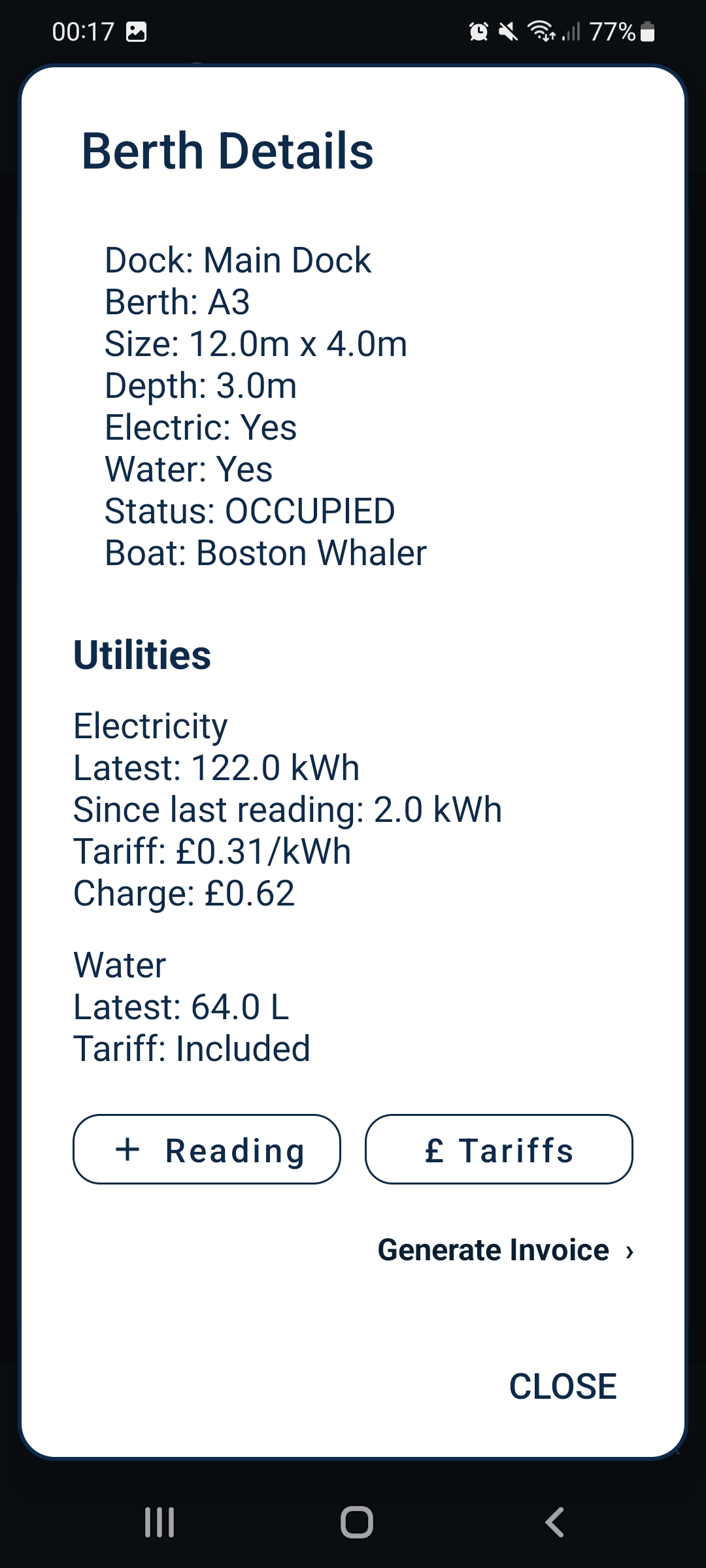
Before creating a charge, staff should be able to review the berth, vessel, latest reading, consumption since the previous reading, tariff and calculated amount. This provides a useful control point for detecting an incorrect entry or unexpected usage.
MARINACONTROL UTILITY WORKFLOW
Reading → consumption → tariff → charge → invoice
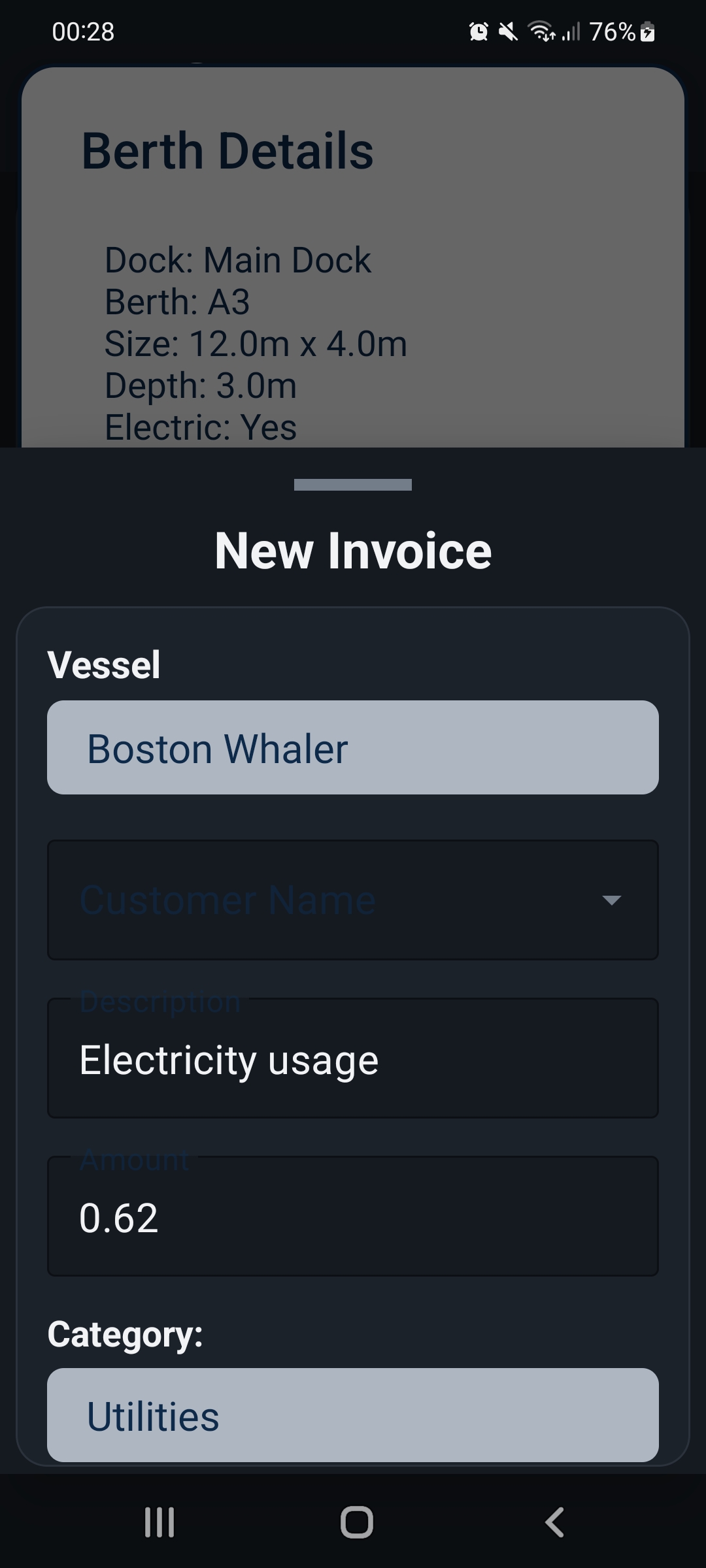
MarinaControl keeps berth details and utility information together. Staff can add a reading, review consumption since the previous reading, see the applicable tariff and calculated charge, and then generate an invoice from that utility record.
The invoice is created when the authorised user selects Generate Invoice; it is not presented as unattended background billing.
Request a MarinaControl demo6. Preserve the audit trail
A useful history should allow the marina to trace the source of a charge. That includes the berth, vessel, readings used, consumption, tariff and generated invoice. Corrections should remain understandable rather than silently changing the basis of an earlier bill.
Exception handling matters
Not every reading should automatically become a charge. A lower-than-expected cumulative reading may indicate a meter replacement, reset or data-entry error. Unusually high consumption may require confirmation before invoicing. Operational judgement remains necessary.
Utility billing begins with reliable operational data
Invoice generation is the final step, but the quality of the invoice depends on the quality of the recorded reading, berth and vessel context, and tariff. Connecting those elements reduces manual reconstruction and makes each charge easier to review and explain.
Operational note: Marina operators should configure utility tariffs, tax treatment, charging rules, customer agreements and invoice controls according to their own contracts, accounting requirements and applicable regulations. This resource does not constitute financial, tax, legal or metering advice.