
Before starting the Dock Walk
A useful Dock Walk starts with context. Before stepping onto the pontoons, check the information that could affect what you expect to find: planned arrivals and departures, berth changes, outstanding defects, weather-related concerns, contractor activity and unresolved items from the previous shift.
1. Berths and occupancy
Compare what is physically on the dock with the marina's expected berth picture. Occupancy discrepancies matter because they can affect arrivals, billing, customer service and operational safety.
2. Vessels and mooring
The Dock Walk is not a technical vessel survey, but obvious changes or concerns should be captured and escalated in accordance with marina procedures.
3. Pontoons, access and dock infrastructure
4. Shore power, water and utilities
5. Safety and emergency equipment
6. Environmental and housekeeping observations
7. Maintenance observations
The most important maintenance question is not simply whether a defect was noticed. It is whether the defect became an owned, visible action.
THE PART A CHECKLIST CAN MISS
A Dock Walk shouldn't end with a checklist.
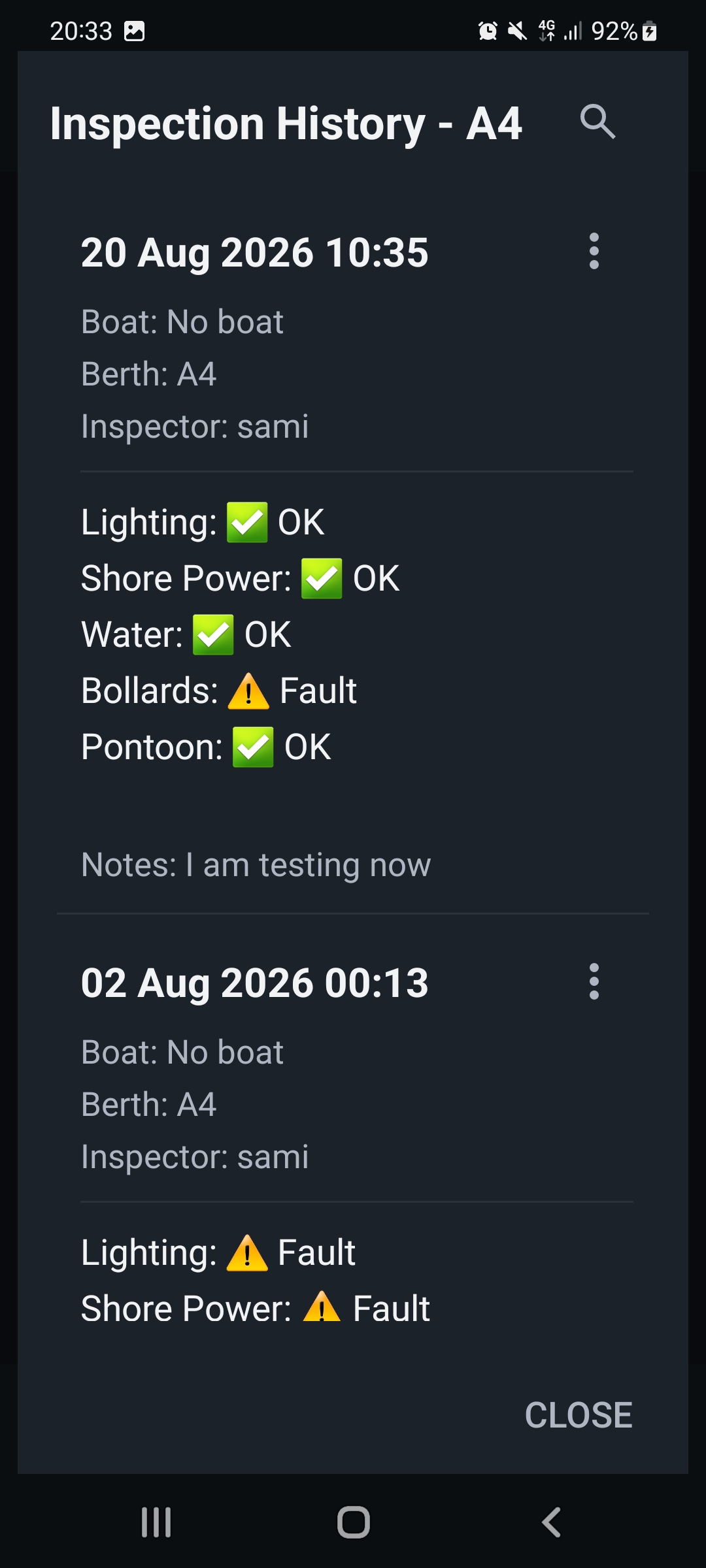
Imagine the walk identifies a damaged shore-power pedestal at Berth B-04. Recording “pedestal damaged” is useful, but operationally it is only the beginning.
A checklist records an observation. An operational process connects that observation to the berth, vessel, customer, priority, responsible person and eventual resolution.
Before completing the Dock Walk
HOW MARINACONTROL APPROACHES IT
Observation → action → resolution.
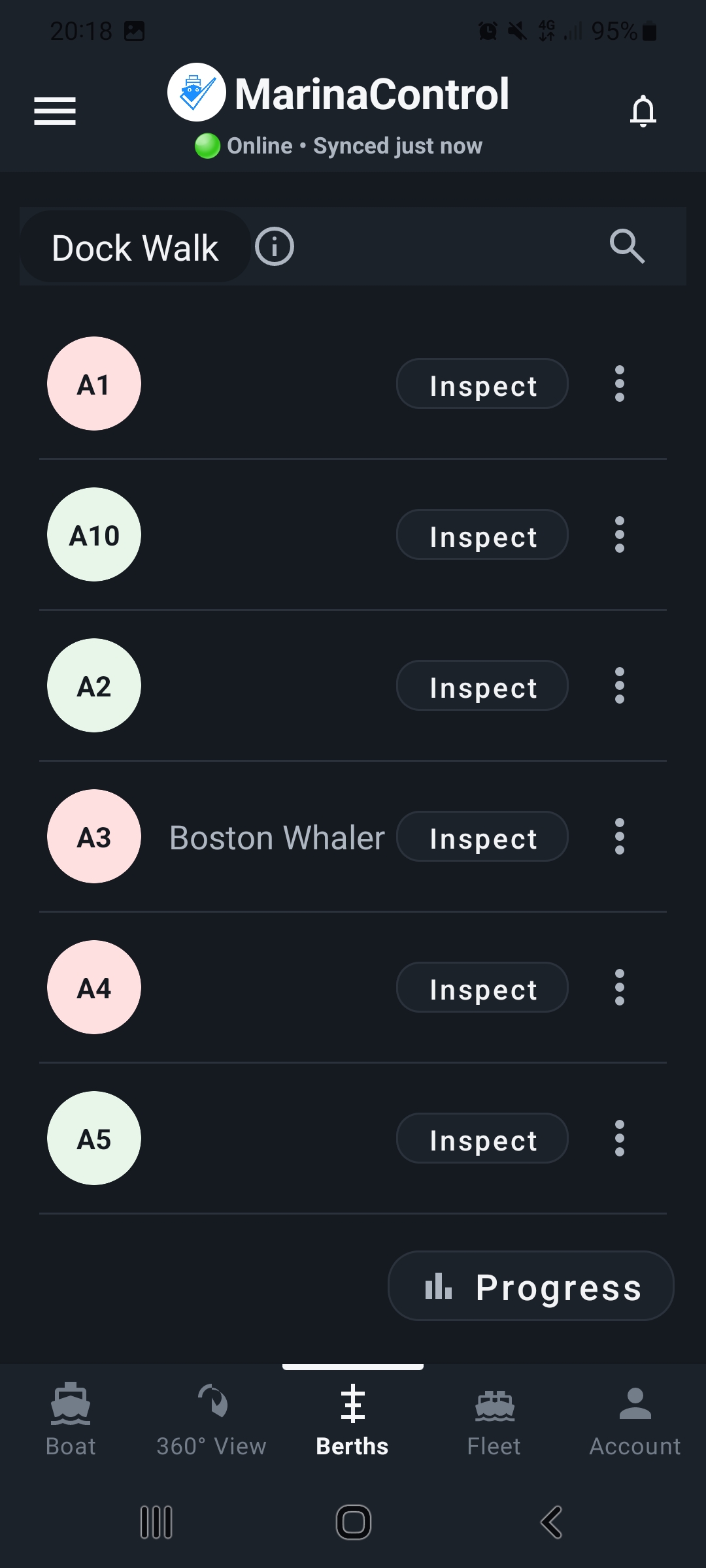
MarinaControl is designed to connect Dock Walk observations with berth status, vessel and customer context, maintenance, safety and operational tasks — so information discovered on the dock can become something the wider operation can see and act on.
One connected operational picture — from berth to boat.
Request a MarinaControl demo